It started in my home
In 2021 The Black Stuff wasn't a company. It was me, a mad idea, and a kitchen my wife wanted back.
It was supposed to be research
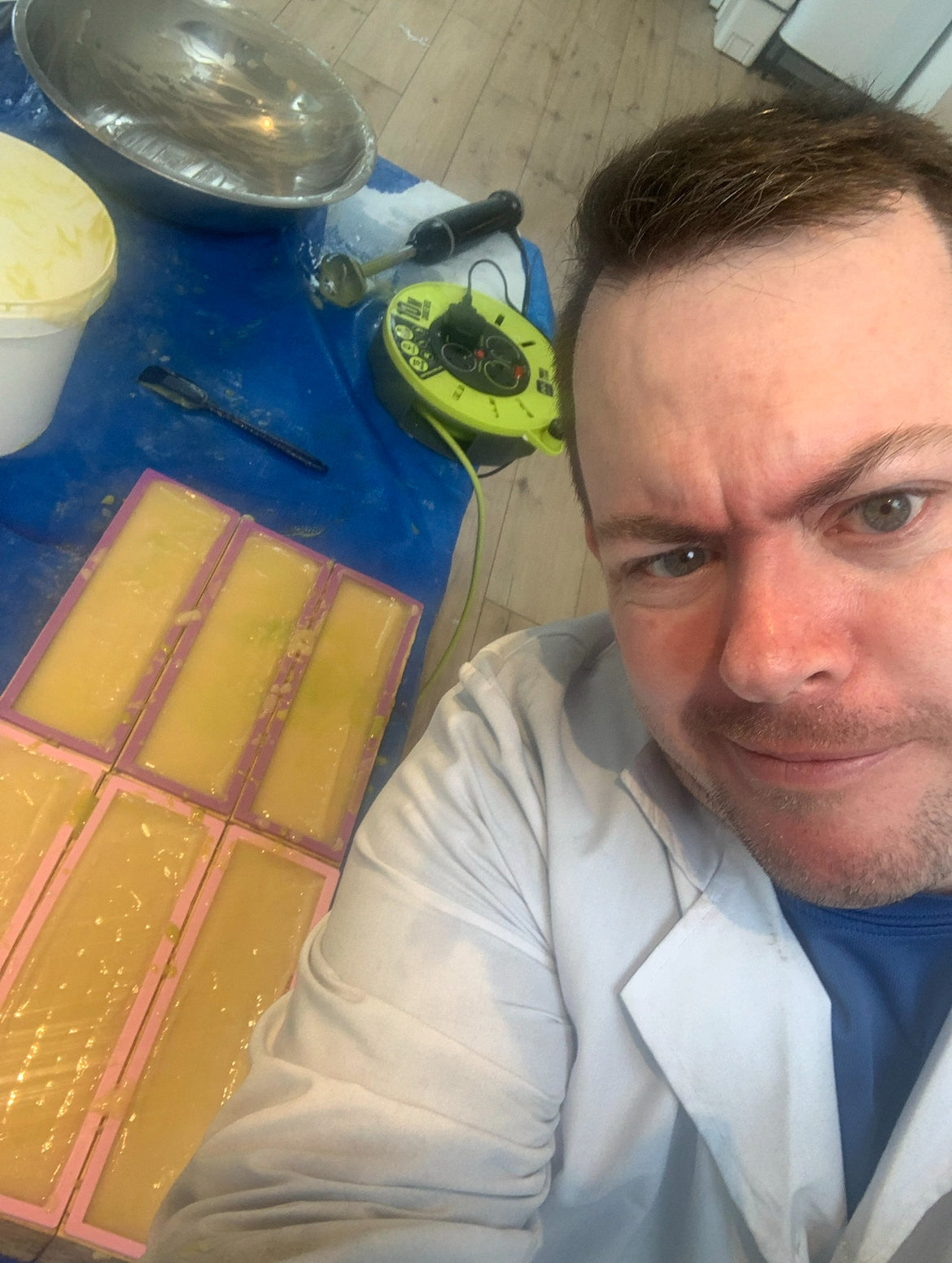
I'd just wound down another business when lockdown hit in January 2021. Cleaning out my office for something to do, I found an old A4 notepad at the bottom of a drawer. Years before, I'd filled a page with product ideas, and halfway down, in my own handwriting: soap for men. I had no memory of writing it. But I was locked in the house with nothing but time, so I thought, right. Let's have a look at that.
I emailed soap factories abroad for samples. A few answered. A few even took my money. Then nothing shipped. For months. Every factory on earth was flat out making hand sanitiser that year. While I waited, I watched a video of a woman making soap in her kitchen and figured I'd understand the product better if I made a batch myself. Purely research, I told myself.
It was not research. What it turned into is below, step by step, exactly as it happened.
Why " The Black Stuff " ?
We used to meet at the lamp post outside my house for a socially distant beer.
One of the lamp post dads still claims the Guinness soap was his idea. That he stood there one evening, can in hand, and said "you should make one out of Guinness." I honestly can't remember. What I do know is that when you make soap you dissolve the lye in a liquid. Usually water. But it can be nearly anything, and I had stout in the house. Of course I did.
The first attempt smelled so bad I thought I'd made it wrong. That's how I learned what curing is for. Give a bar a few weeks on the rack and the liquid evaporates out of it, the beer smell with it, leaving a harder, longer-lasting soap.
When I finally tried it in the shower it was properly good. The sugars in the stout gave a rich lather, the smell was woody and spicy, and I legged it out dripping to google whether Guinness had ever trademarked the slang for a pint. "The black stuff." Nothing. They had not. That was the day an idea became a company: a soap business named after a pint.
From a kitchen counter to four buildings
We document every step. Here's how it is going.
Nine dodgy soaps
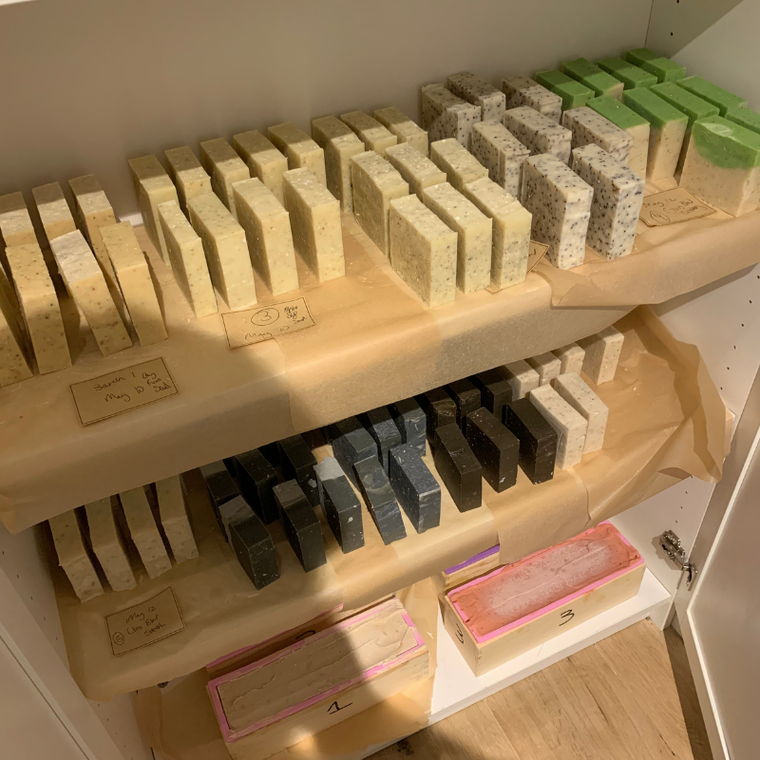
Amazon was about the only company still delivering to Ireland, so the ingredients came from Amazon. I made nine bars on the kitchen counter the first day. They were genuinely poor. But I'd made something out of nothing, and that was interesting.
Nobody could travel more than 5km from home and there was nothing else to do. So I made soap the next day. And the day after. Within weeks every surface in the kitchen had bars curing on it, my kids sat their remote classes with piles of soap in the background, and my wife wondered aloud whether I was having a breakdown. Other people baked bread that year. Not me.
The beach bar incident
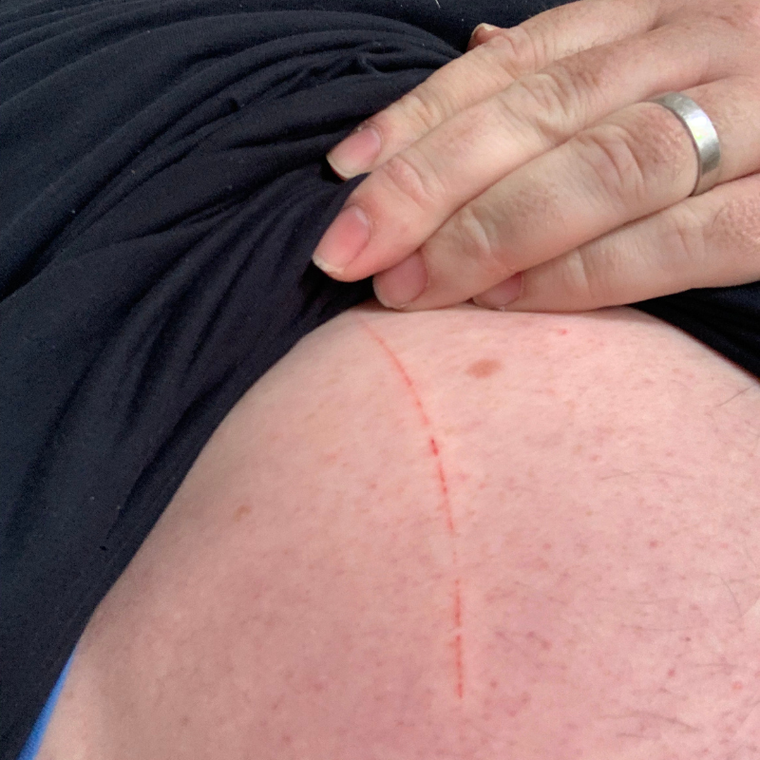
Early on I had a romantic notion about a bar made with sand from the local beach and water from the Irish Sea. It opened my stomach up in the shower like I'd been in a bar fight. That beach's sand, it turns out, is mostly crushed shell and broken glass. Lesson one, learned the hard way: knowing where an ingredient comes from isn't the same as knowing what it does. Finding out what every single thing in a bar of soap actually does became the whole project. At the worst of it I was taking hour-long showers with seven or eight bars lined up, washing one arm with one and the other arm with another, taking notes with wet hands.
The neighbourhood panel
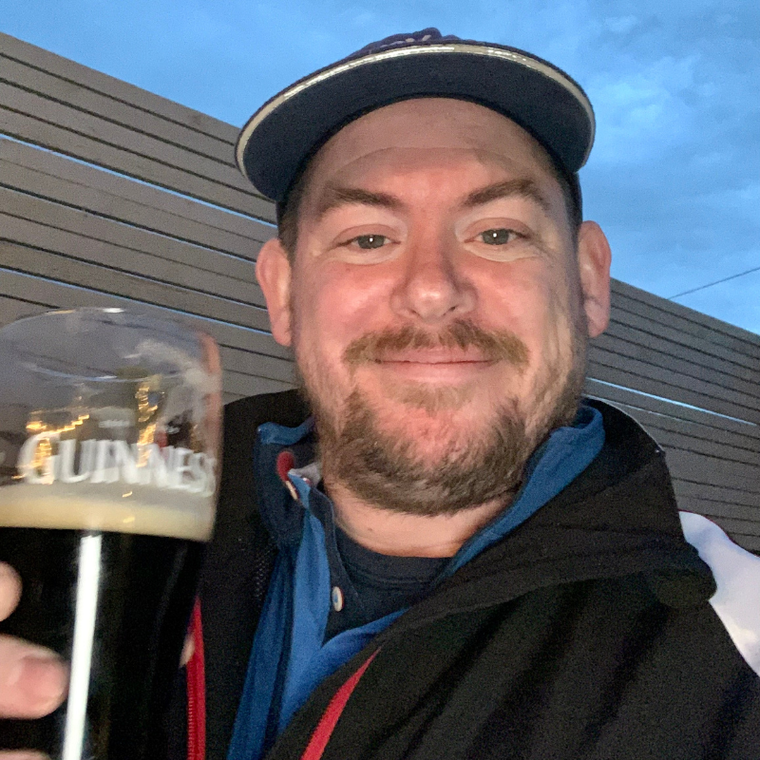
In the evenings the dads of the road met at a lamppost outside my house for a socially distant can, standing two metres apart like this was a normal thing men did. I never arrived empty-handed. There was always a bar or two in my jacket for them to smell and slag me over. They were my first testers, my first critics, and depending on who you ask, the source of my best idea.
The batch that named the company
Somewhere in the middle of all this came the Guinness batch. The one that smelled so bad I thought I'd ruined it, taught me what curing is for, and ended with me dripping at the computer googling trademarks. The full story is just above. Short version: a soap business got named after a pint.
The samples finally arrive
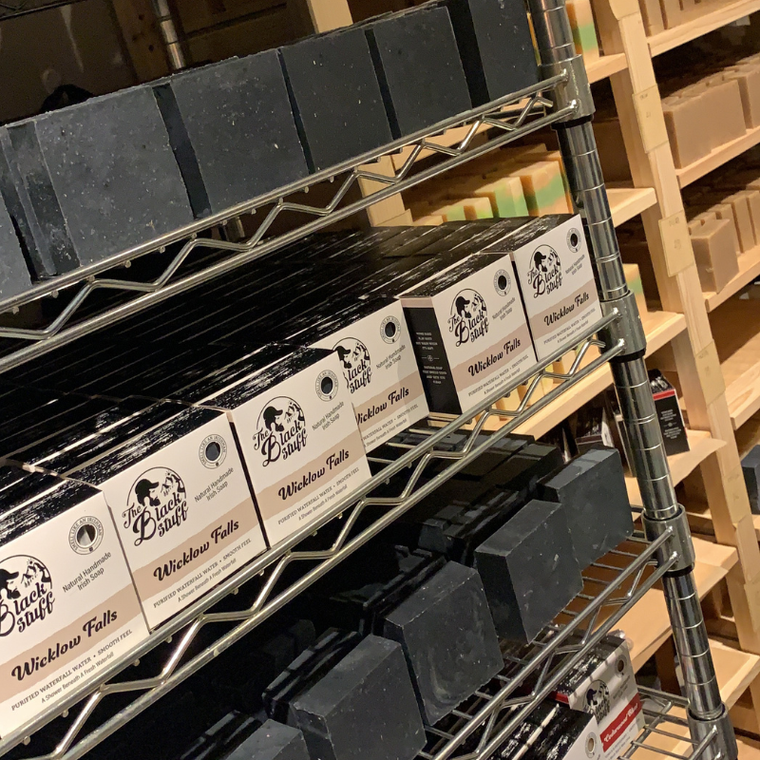
The manufacturer samples I'd paid for months earlier turned up at last, in battered boxes. I used them for a week and realised something that quietly changed the entire plan: my kitchen soap was better. Not close. Better. I sat down with the calculator on my phone and worked out whether you could build a proper handmade business that scaled. I thought so. There was no going back to the manufacturer plan after that.
The first 100 customers arrived because i bought a stranger a pint
I launched that summer with six scents, all made by my own two hands, 54 bars at a time. I sold to America first. EU cosmetics paperwork is heavy for a one-man operation, and honestly, if it flopped over there, nobody in Ireland would ever have to know.
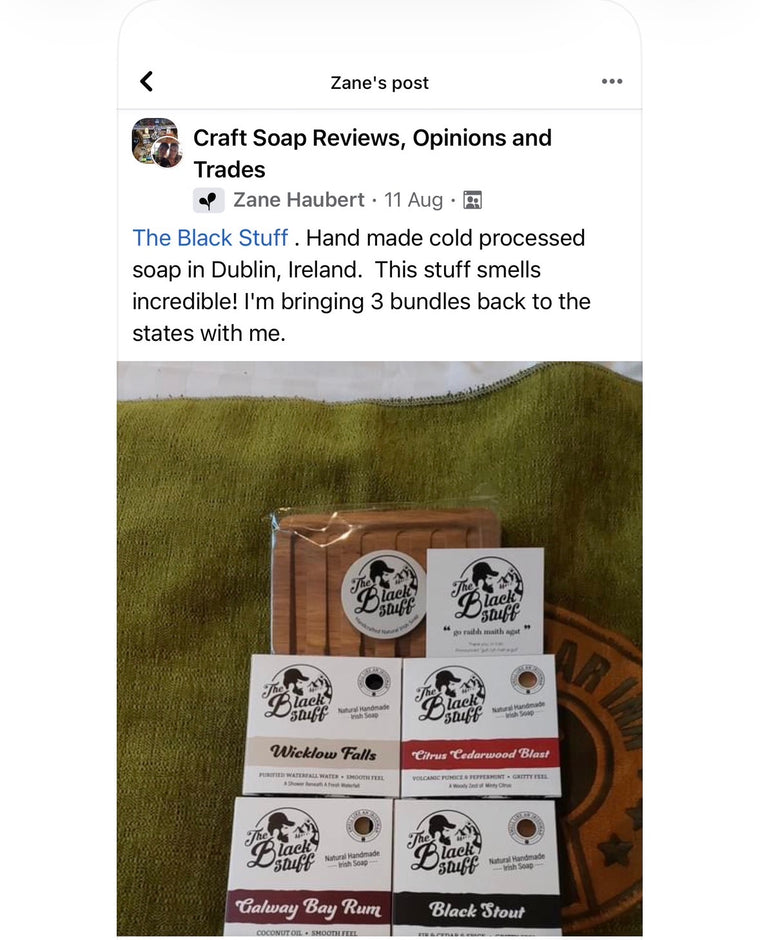
About three customers in, a Facebook message arrived. An American called Zane, travelling to Dublin, asking to buy in person. My wife was fairly sure this was how true-crime documentaries start.
I met him in town with his order and bought him a pint. Turned out Zane was a soap enthusiast. There's a whole online group who collect and trade handmade soap the way other men do whiskey.
That night he posted a photo in the group, Craft Soap Reviews, and asked me for more to bring home for his friends. My first hundred customers came out of that group. Men who'd tried every handmade bar going and had zero interest in the fact that mine was Irish. They bought it because it held up. Most of them are still customers five years later.
Every bar, my own two hands
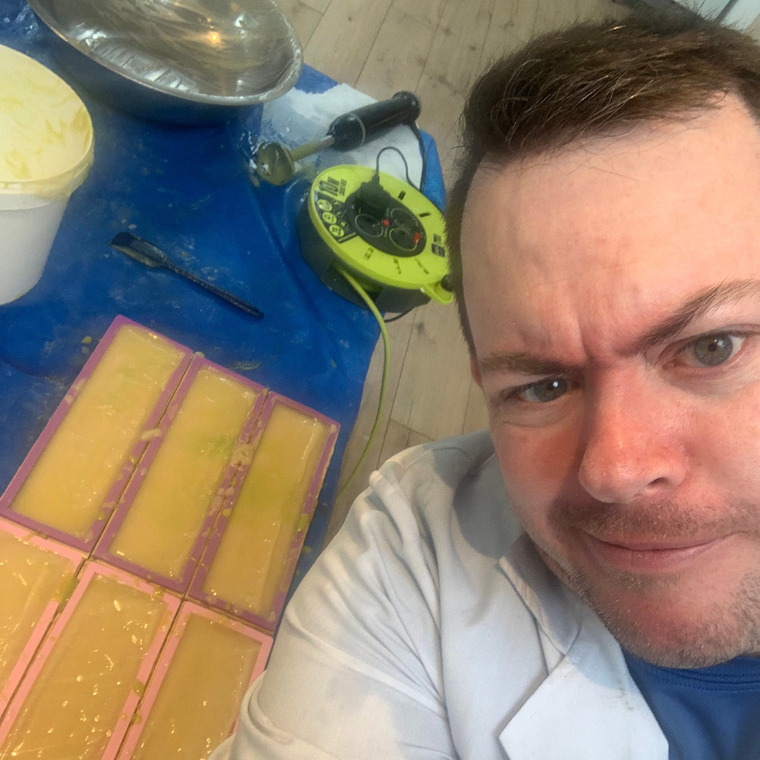
For the first eighteen months I made every single bar we sold. At one point my spreadsheet said I was €30,000 in the hole on ingredients and packaging before I'd earned a euro of it back. Eventually my wife looked around the house and said the sentence that ended the kitchen era: "I thought you were an entrepreneur. It looks like you've turned our house into a soap factory." She was right. So I moved it out.
Davey joins
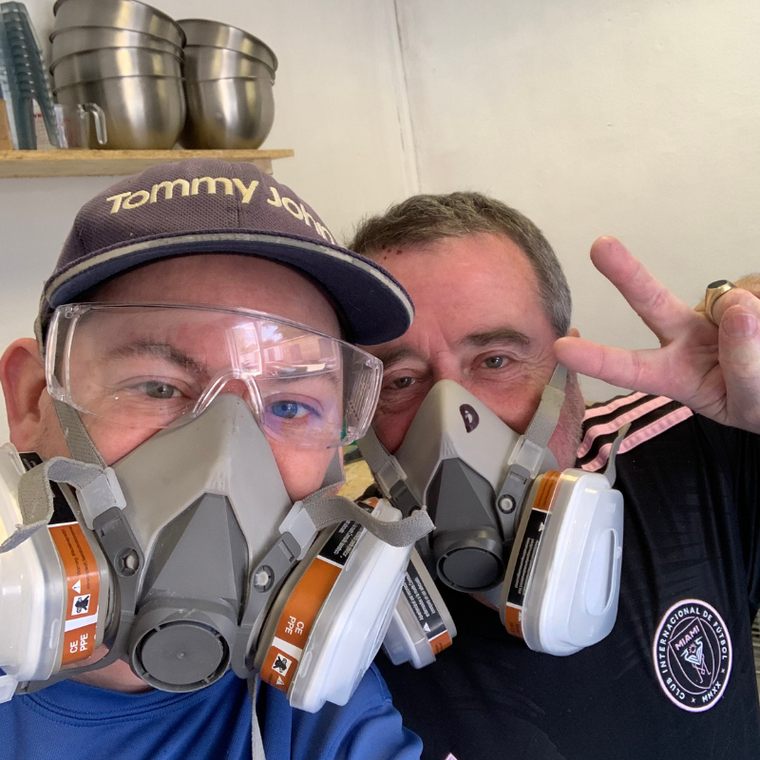
The first stop was a shed up the road in Blackrock, and the first hire was Davey. An old friend I'd worked with before, local, and between things at the time. I asked, he said yes. For six months it was just the two of us. I made all the soap; Davey did everything else: the prep, the cutting, the postage, the wash-up.
Vicky learns to make soap
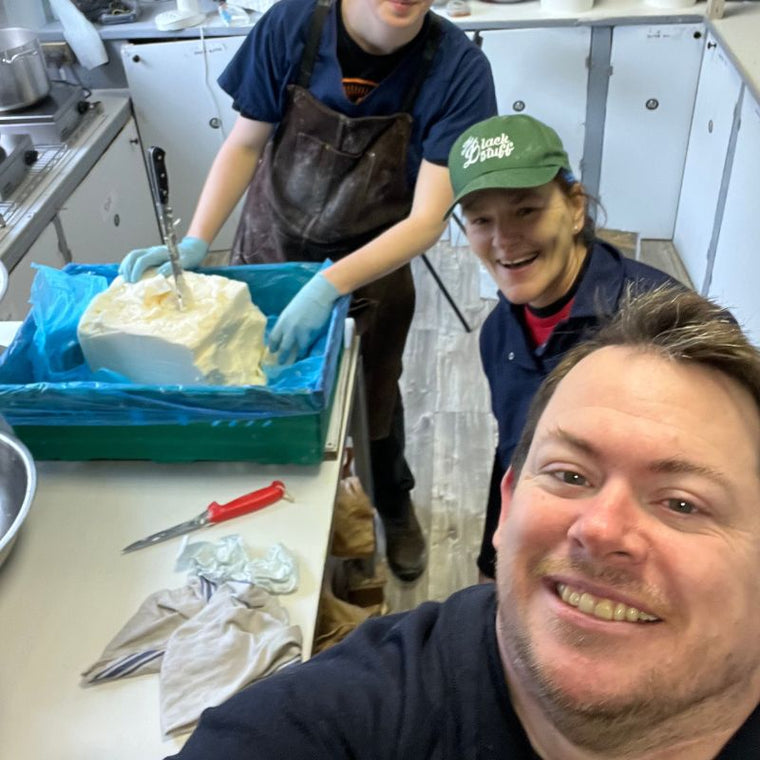
To grow production I needed another soap maker. But how do you find someone who already knows how to make soap? You don't. You find a chef. Soap making is precision, following a recipe, trusting the process. Not so different from cooking. I found Vicky in Amazon's kitchens. She's from Spain, she's fantastic, and she became our first dedicated soap maker. She's been with us ever since.
The first proper workshop
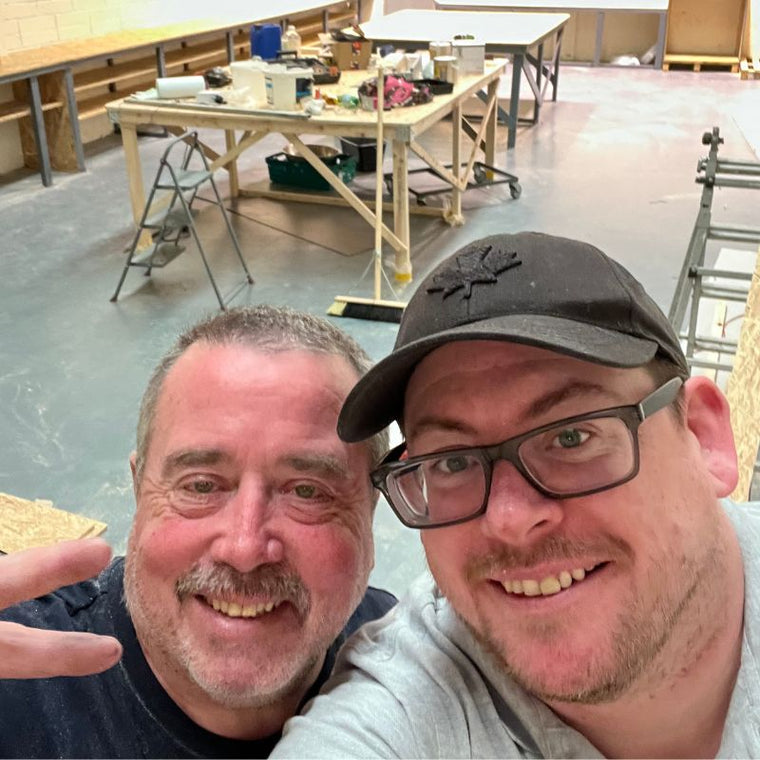
Three became six and we quickly outgrew the shed. Within 9 months we were on the lookout for more space so we rented our first real workshop in Sandyford Industrial Estate.
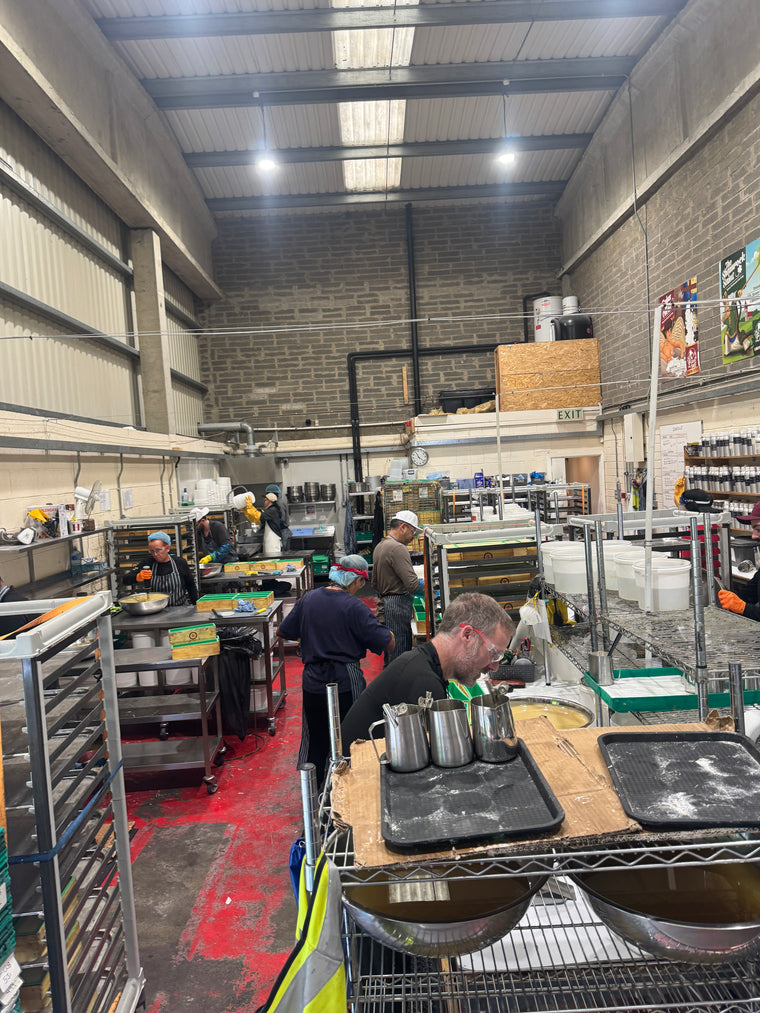
We named it Terminal One, which felt like a joke at the time. One unit and grand ambitions. To this day, every bar of our soap is still made there.
Our advertising...
You probably came to find us through one of our ads. Yes... we advertise a lot (sorry!).
But the reason we are able to do this, is that once people discover our brand and buy from us. They tend to come back over and over.
And lets face it. The world deserves to discover The Black Stuff.
The joke stopped being a joke
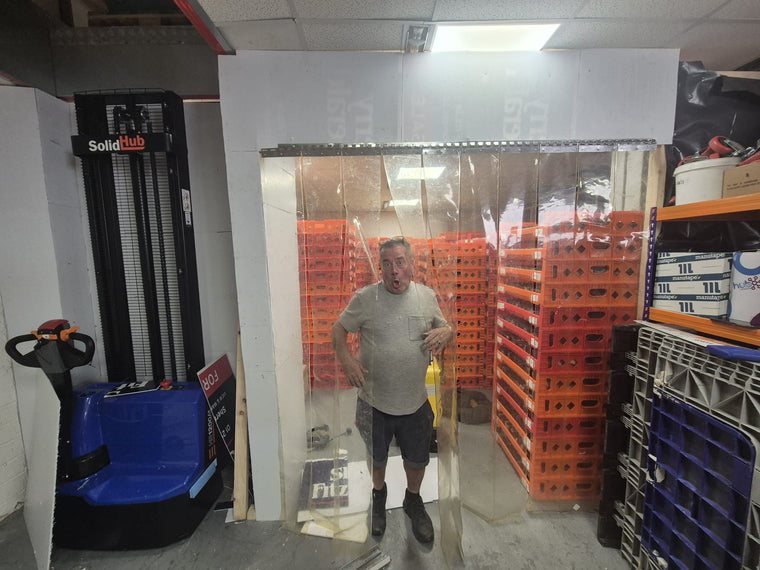
Then the name kept coming true. Terminal Two is the unit next door, grabbed when One ran out of room. Terminal Three is a storage facility down in Kilcoole, Wicklow, holding the oils and packaging we buy by the pallet. Terminal Four, a couple of streets over in Sandyford, is HQ now. Everything happens there except the soap itself, which has never left Terminal One. I started out doing everything on a kitchen counter. Now it takes four buildings.
More than soap
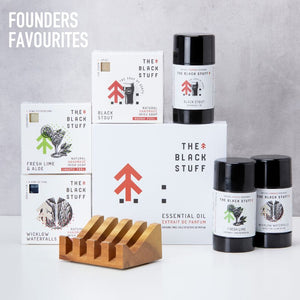
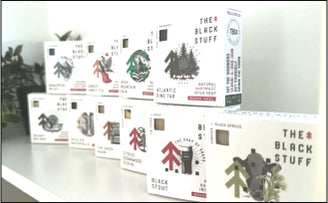
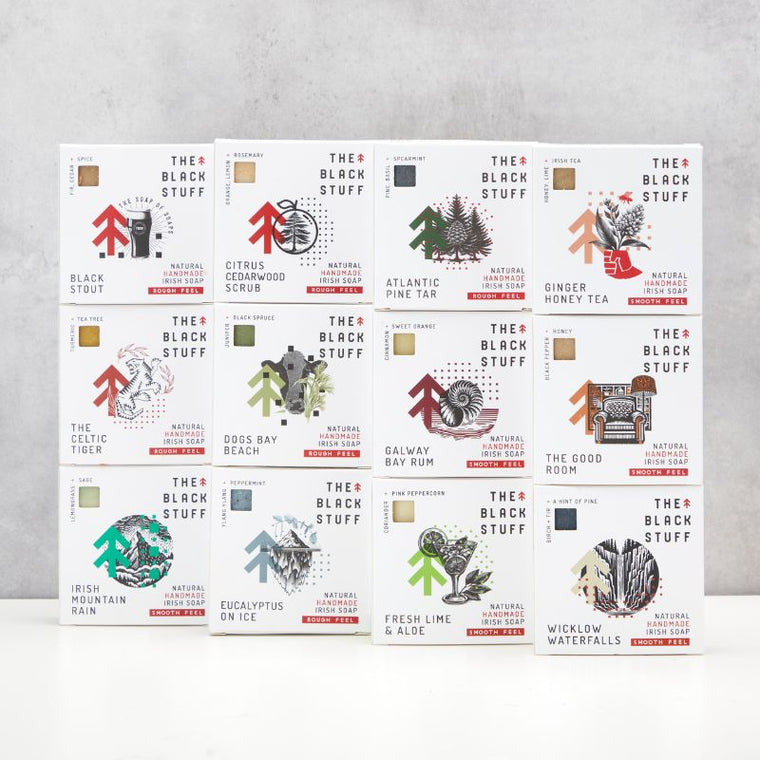
Soap grew into a full range: beard care, shaving, deodorant, cologne and the accessories that make bar soap easy to live with. The six scents I launched with are twelve now. Every one blended by me, from essential oils, never a drop of "fragrance."
Scale has not compromised our quality.
The Soap Locker
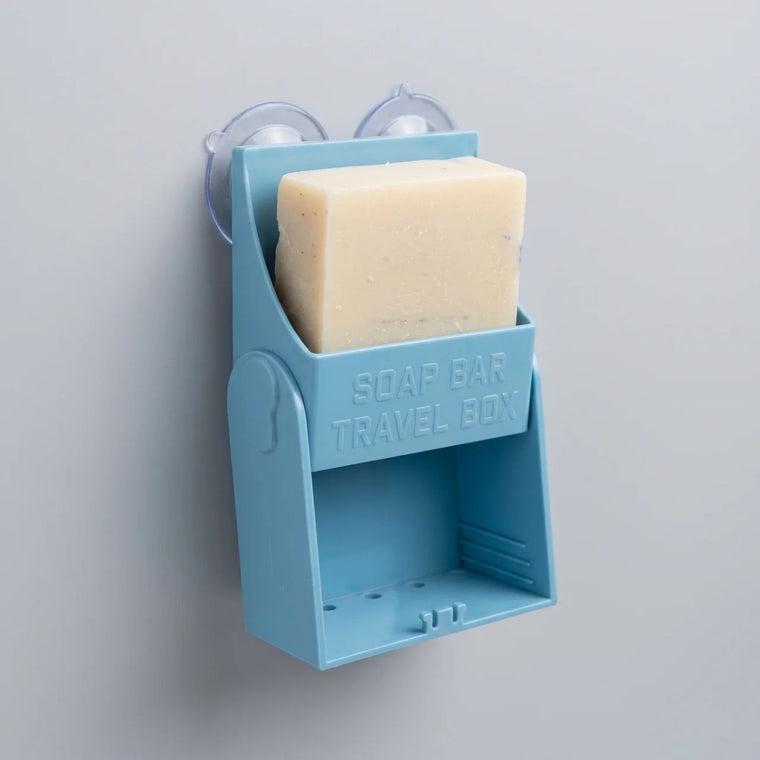
I didn't make this one happen. A customer did (shout out to Alan). The Soap Locker was built by someone in the community who loved the product enough to create something around it.
They came up with the design, were 3d printing it in their house. I bought it from them for a thousand pounds plus a thousand in gift cards.
Now we've brought it to reality for the world to enjoy.
1 Million Soaps - 54 at a time
What started with a hundred soap enthusiasts in a Facebook group is now a community of 15,000-plus, swapping scent recommendations, sharing photos, showing up for every limited-edition drop, even flagging counterfeits for us. Around half of everyone who tries us comes back. That number is the whole business, honestly. The rest is just soap.
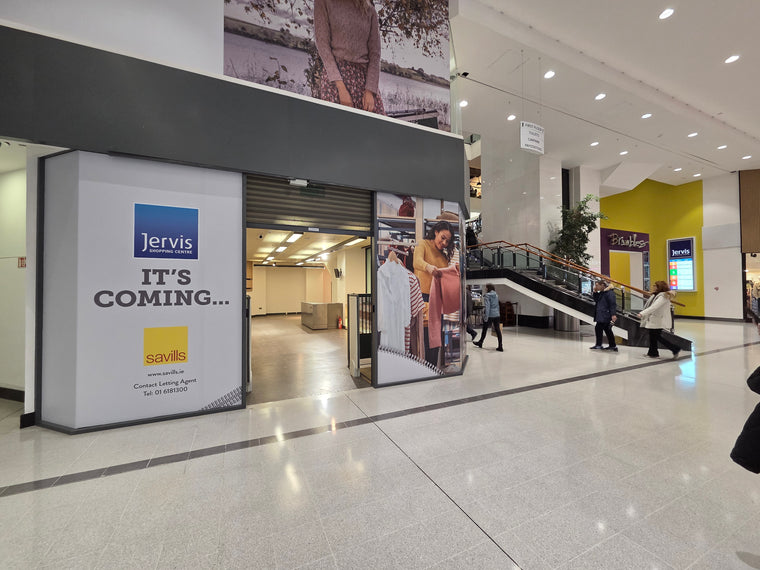
Our first retail store
Stay tuned for more information, but we're opening our first store later this year in dublin city center.
No soap-making robots
The formula came from a rule I didn't know existed. You're not meant to go past 2-3% shea butter, because shea is dear and at scale those percentages are the whole margin. Nobody told me, so I put loads in. Our bar is more than half olive oil and shea to this day. The expensive half. The part that leaves skin comfortable instead of tight. Coconut for the clean and the lather, castor for feel, sustainably sourced palm so the bar lasts. Five oils, each with one job. Nothing there for the label. Cold-processed, hand-cut, cured on racks for weeks, scented with essential oils and never the word "fragrance."
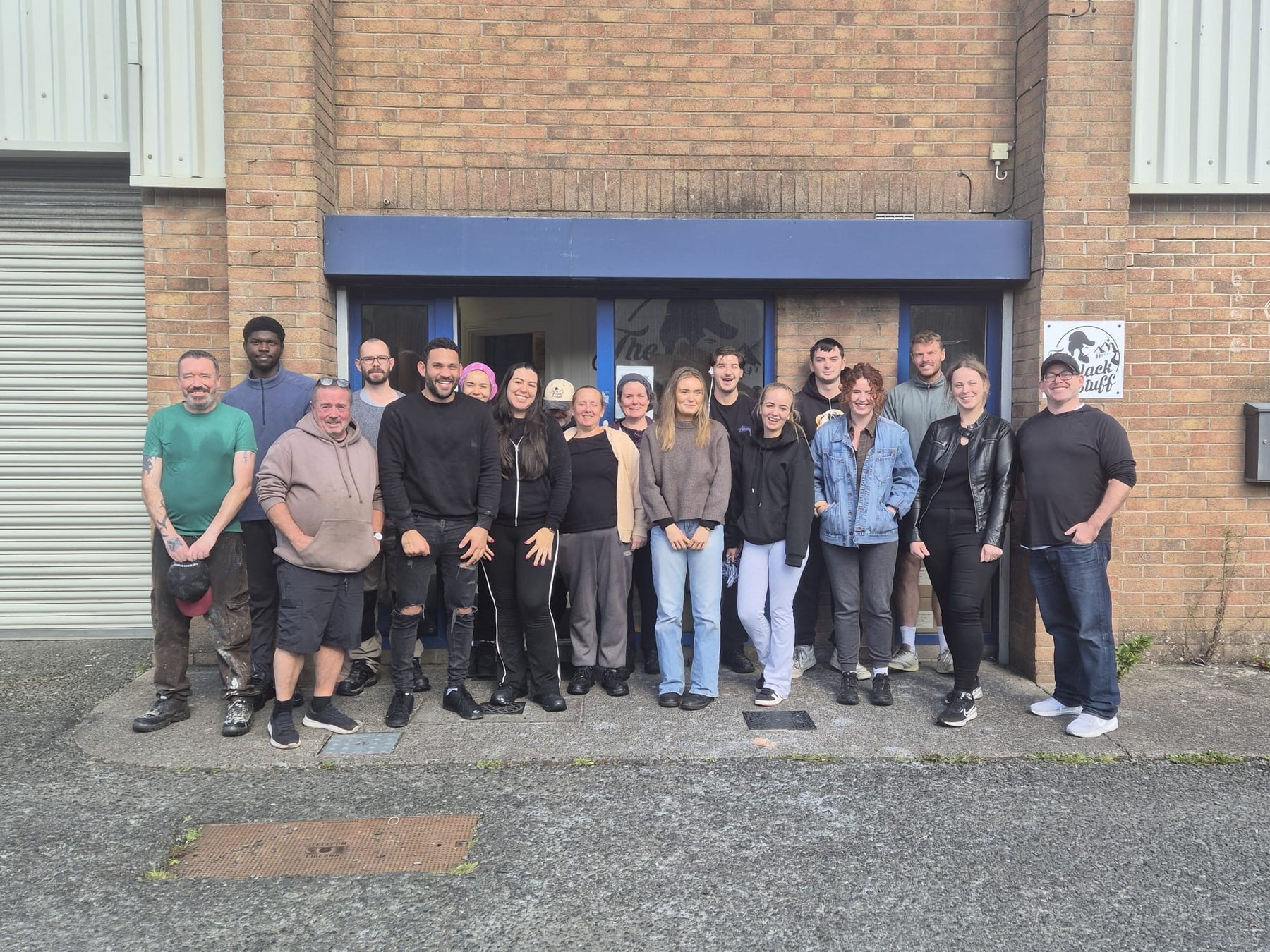
The crew
Real people, real soap. A few of the faces behind every bar.
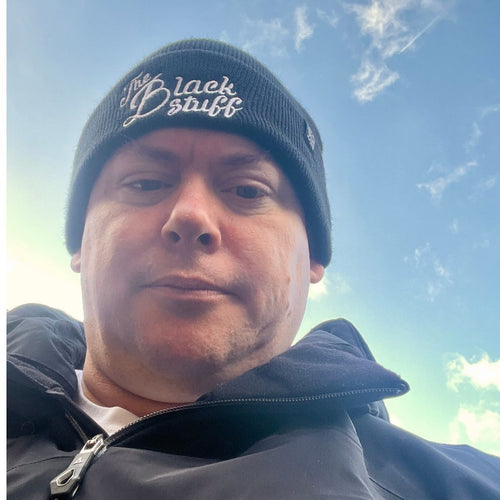
I've wanted to create this brand my entire life.
Made every bar myself for the first 18 months.
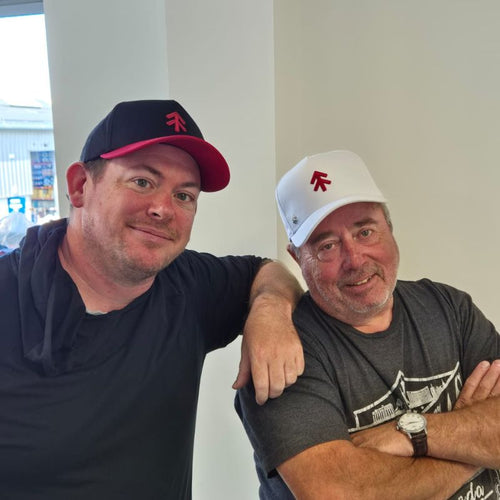
Since the Blackrock shed
John's trusted first hire, an old friend.
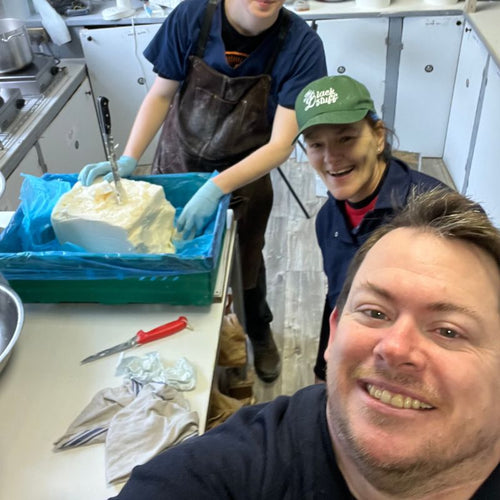
Since 2022
Came from Amazon's kitchens. Our first-ever soap maker.
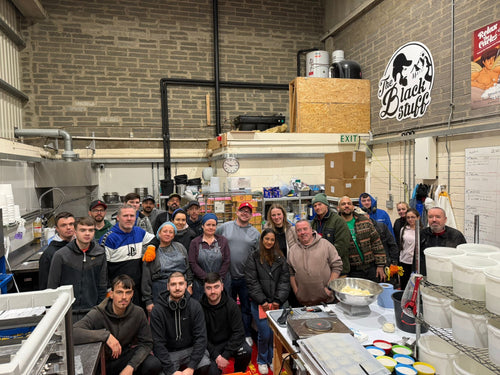
Without compromising quality.
Fancy giving it a lash?
Twelve scents, and honestly nobody can tell you which one is yours until it's been in your shower a week. So we made a starter box. Six of our most popular bars, covered by the No Duds Guarantee.