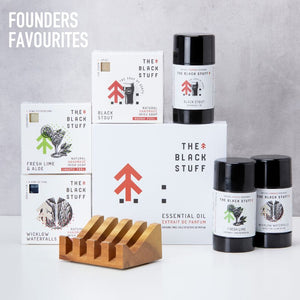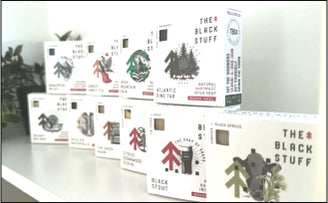
5 Things You've Been Told About Soap That Are Completely Wrong.
Soap dries your skin. Fragrance is natural. Handmade bars fall apart. You can't scale without a factory. And cheaper is always better. We make a million bars a year — and every single one of those claims is nonsense.


I've been making soap for over five years. In that time I've heard the same handful of objections from people who haven't tried proper soap — over and over again. "Soap dries my skin." "Natural products don't last." "You can't really know what's in them." Let me explain why every one of those is wrong, and what's actually going on in the products you use every day.
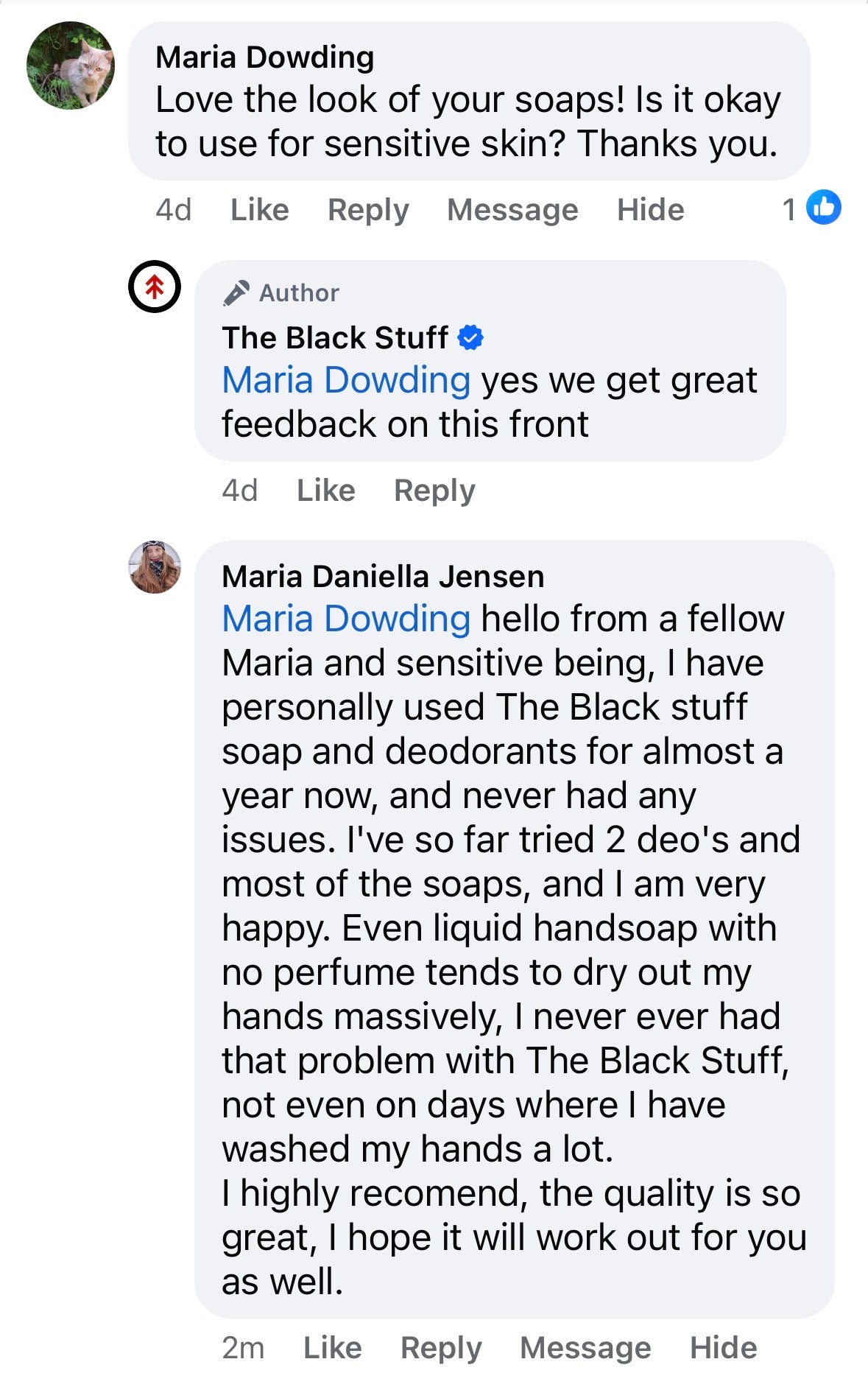
This is the one I hear the most. And the frustrating thing is — it's half true. Most soap does leave your skin feeling dry. But the problem isn't soap itself. It's the ingredients inside the soap.
That tight, dry feeling isn't "clean." It's damage.
Commercial bars and shower gels are loaded with synthetic detergents — things like Sodium Lauryl Sulphate (SLS) — which strip the natural oils from your skin. They're the same compounds used in industrial degreasers. Your skin feels "squeaky clean" because its protective moisture barrier has been completely removed.
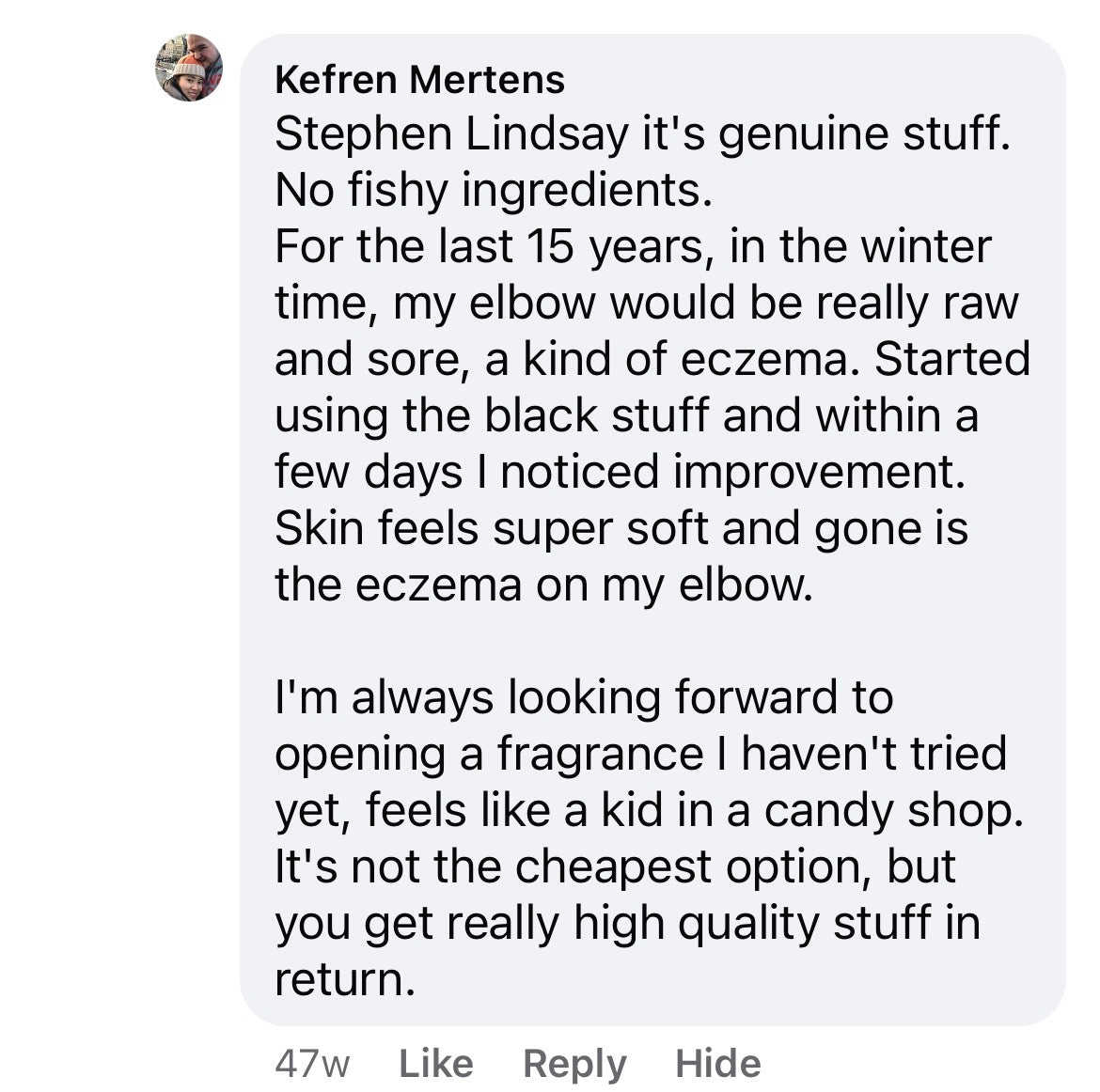
But here's what most people don't know: the ingredients you choose to make a soap determine how it treats your skin. Different oils bring different properties. Olive oil is rich in oleic acid and vitamin E — it's a natural emollient that conditions and softens while it cleans. Shea butter is packed with fatty acids that form a protective layer over the skin, locking moisture in. Coconut oil creates a rich, creamy lather. Castor oil draws moisture from the air to your skin (it's a natural humectant).
On top of this, real cold-processed soap produces its own glycerin during the chemical reaction. Glycerin is one of the best moisturisers known to science — and commercial soap manufacturers actually remove it from their bars so they can sell it separately to cosmetics companies. We don't. Every drop of glycerin stays in the bar where it belongs.
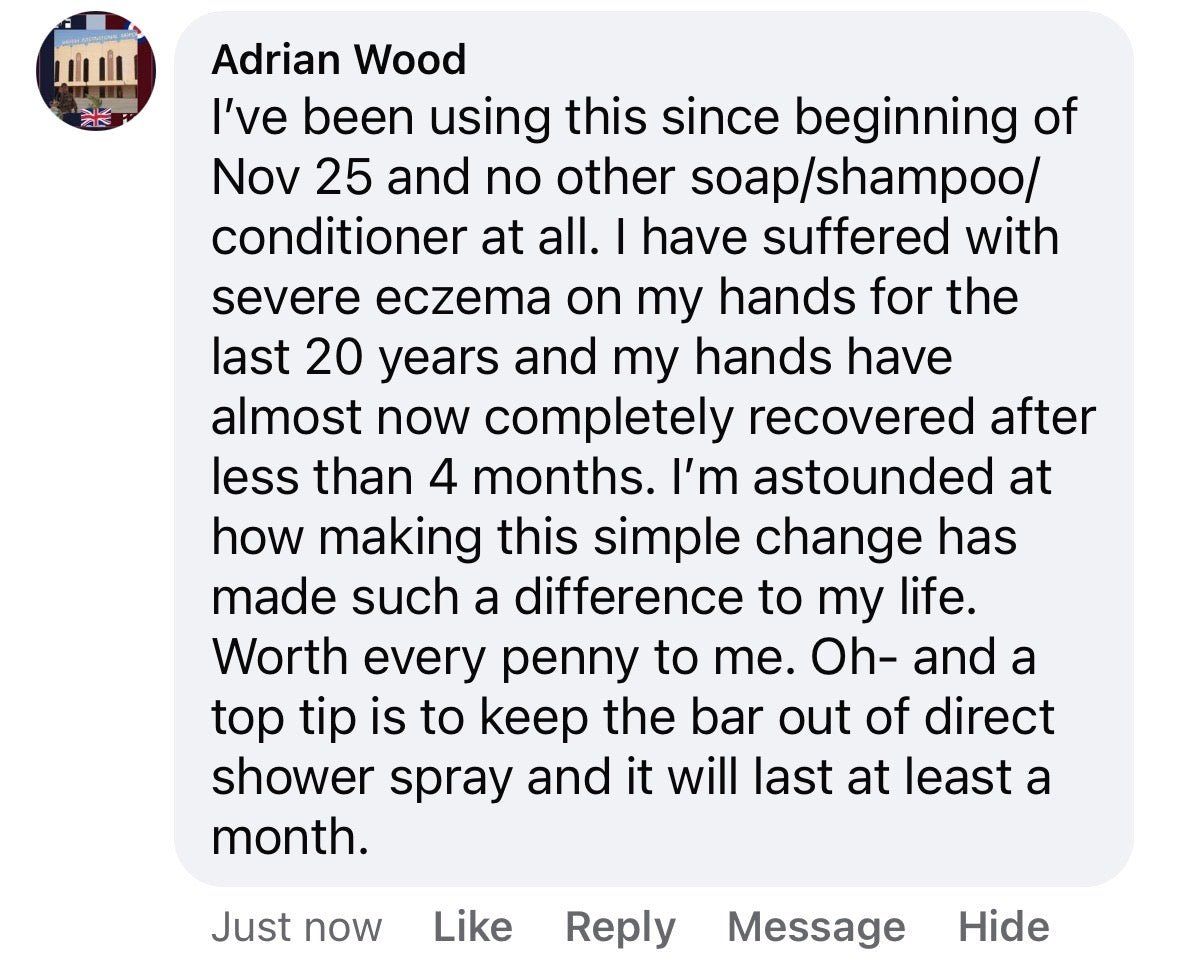
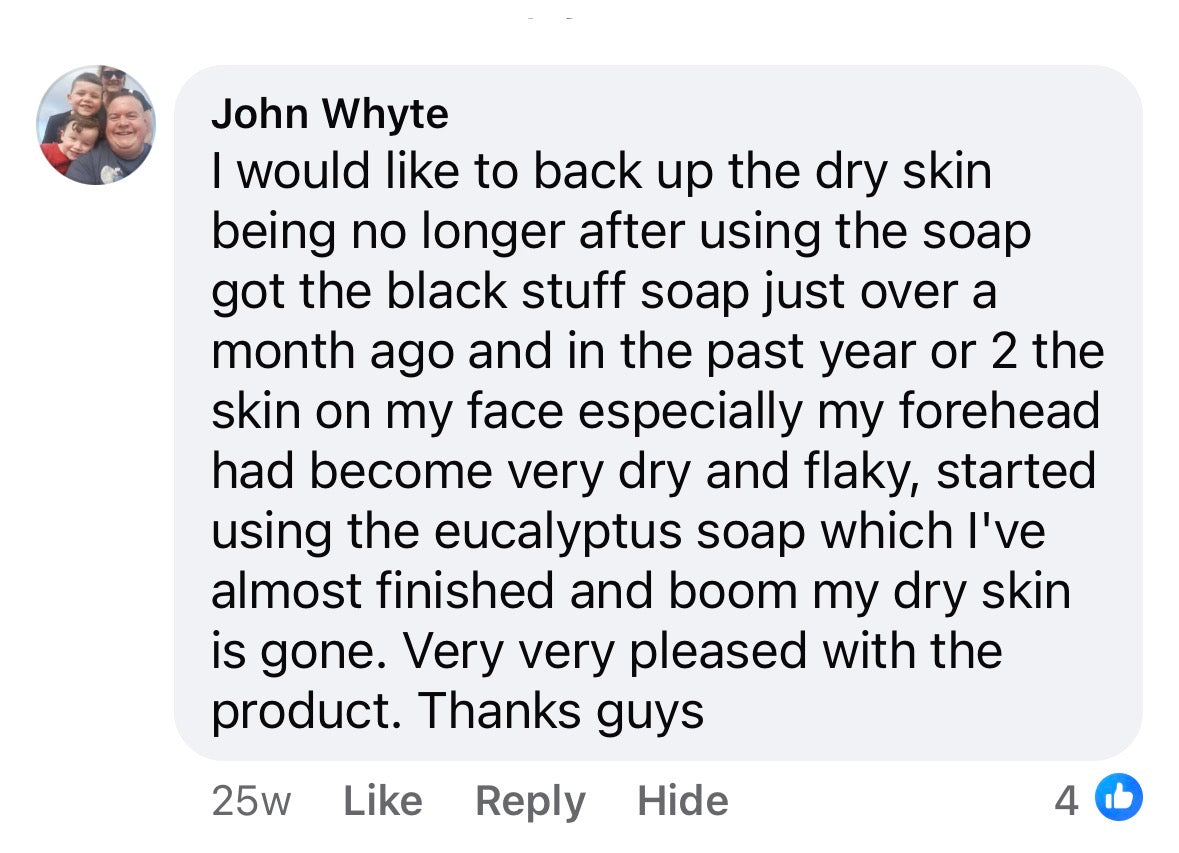

Here's something that surprised me when I started making soap: the word "fragrance" (or "parfum" on a label) is legally allowed to hide hundreds of undisclosed chemicals. It's treated as a trade secret. The company doesn't have to tell you what's in it.
Some of those materials include phthalates — chemicals originally designed to make plastics more flexible — which are used in fragrances to make scents last longer on your skin. Phthalates are classified as endocrine disruptors, meaning they can interfere with your body's hormonal system. They've been linked to reproductive health concerns, allergic reactions, and skin sensitivities. And you'd never know they were there, because the label just says "fragrance."
There's no legal definition of "natural" when it comes to fragrance. It's a marketing term, not a regulated one.
We chose a different path entirely. We don't use fragrance. We don't use parfum. Instead, we blend our scent profiles from pure essential oils — actual plant extracts. Pine from Scots pine trees. Cedarwood. Spearmint. Basil. Orange. Black pepper. Every oil we use is listed individually on the label. Nothing hidden, nothing vague, nothing synthetic.
The result is a different kind of scent. Not the aggressive, locker-room "Sport Blast" you get from synthetic fragrance. More like walking into a room where something smells incredible but you can't quite place it — warm, earthy, grounding. That's what real essential oils do. It takes longer and costs more, but we believe you deserve to know exactly what's touching your skin.
Curious? Our bundles are the easiest way to try a range of scent profiles.
Explore Bundles →This one's fair. A lot of handmade soap does disintegrate quickly. But there's a specific reason for that — and it comes down to a step that most soap makers skip.
To make soap, you need lye (sodium hydroxide). Lye comes as a dry powder, and to use it, you dissolve it in liquid — usually distilled water, but sometimes something more interesting (we use Guinness in some of ours, and tea in others). This liquid is essential for the chemical reaction that turns oils into soap. But here's the catch: the same water that creates the soap also weakens it. After all, how do you use up a bar of soap? You add water.
The same water that creates the soap also destroys it. That's why curing matters.
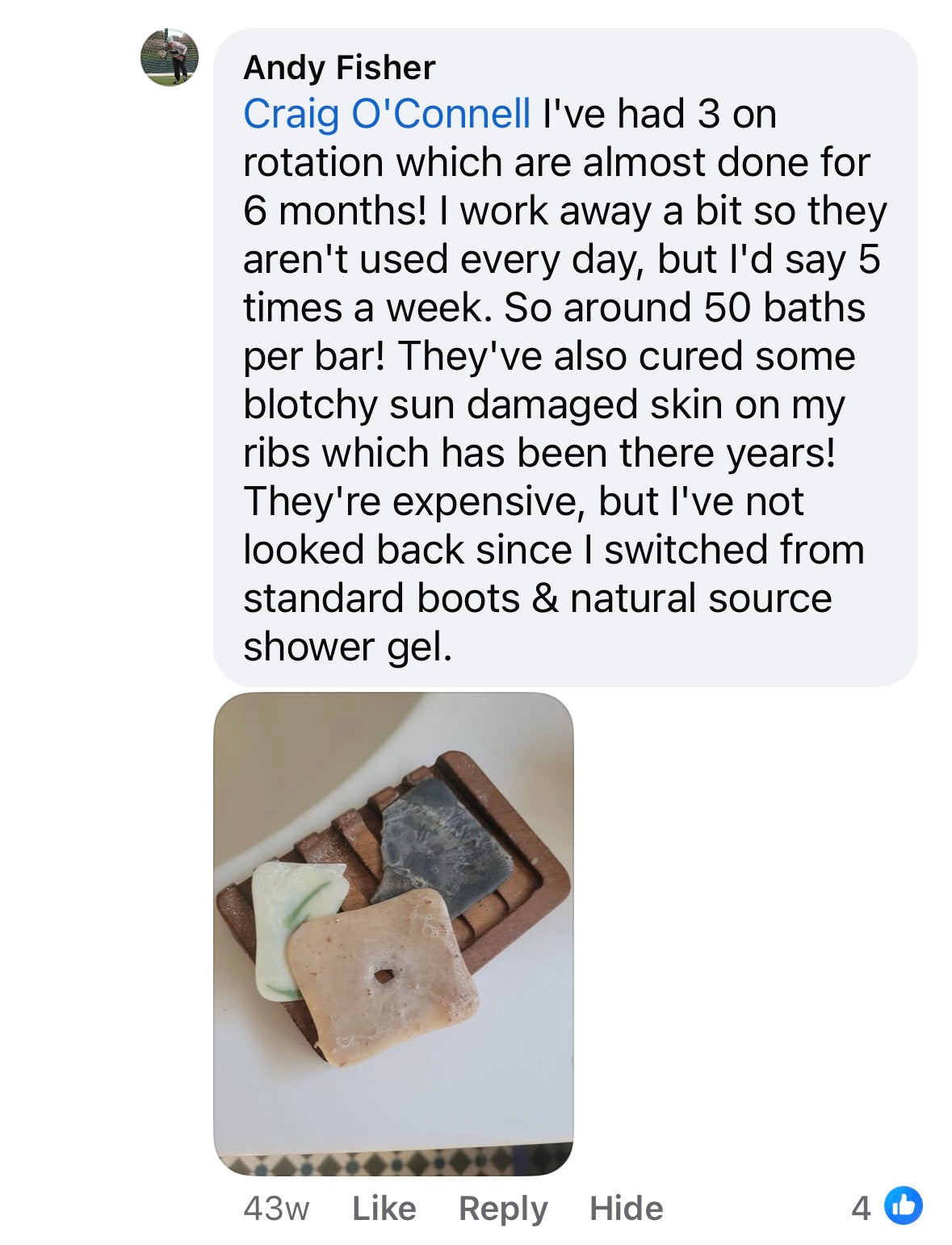
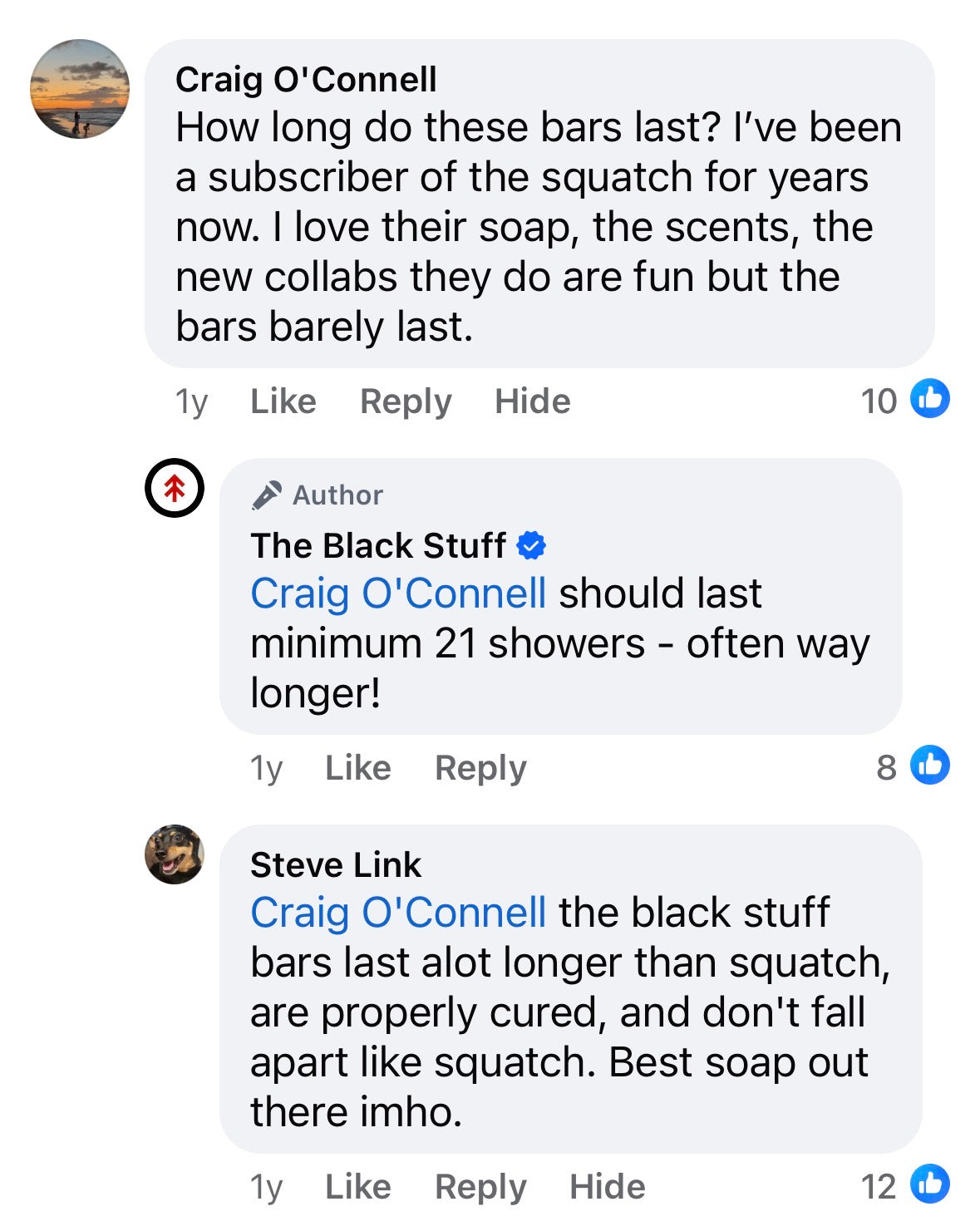
After we cut our bars, they go into our cure room for 3–4 weeks. During that time, the excess water slowly evaporates from the bar. As it does, the soap molecules rearrange themselves into a tighter crystalline structure. The result is a harder, denser bar that lasts dramatically longer in the shower — not the mushy lump you'd get from an uncured bar.
A properly cured bar also lathers better, feels smoother on the skin, and is milder because any remaining traces of lye have fully completed their reaction with the oils. It's a better product in every single way.
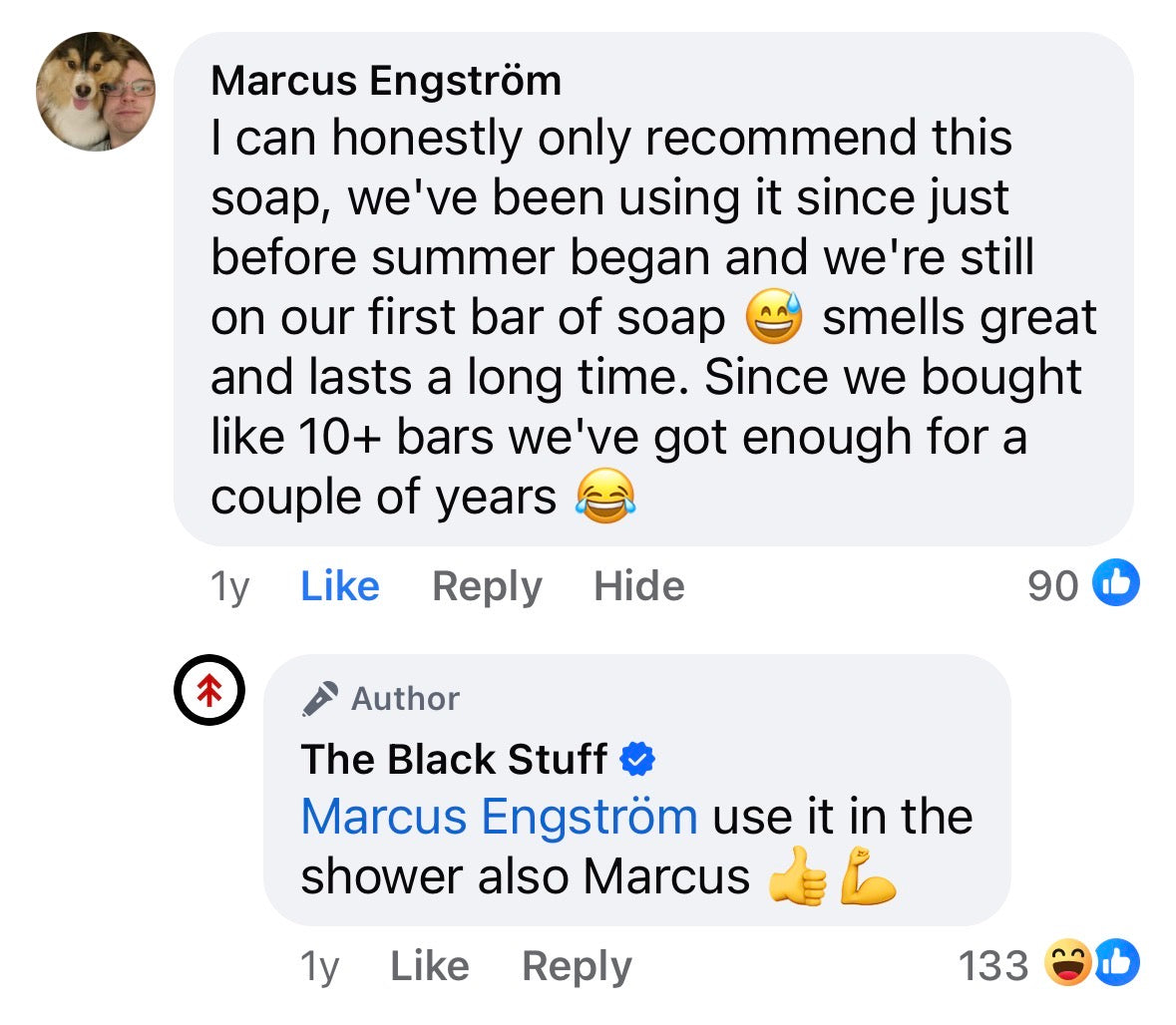
Most soap companies skip this step. It's expensive — you need dedicated space, airflow, and you're sitting on stock for weeks before you can sell it. It's also counterintuitive: a bar that lasts longer means the customer buys less often. But we'd rather make something good than something that runs out fast. Every bar we sell has been cured for a minimum of three weeks before it leaves our workshop.
We made over a million bars last year. Every single one was made by hand, 50 at a time.
I started The Black Stuff alone in my kitchen during Covid. For the first two years, I made every product we sold in my house. It was just me — mixing oils, pouring moulds, cutting bars, labelling them, posting them. It was brilliant and exhausting in equal measure.
Today we have 35 people in our workshop in Sandyford, Dublin. We haven't automated. We haven't outsourced. We haven't bought a single machine that replaces a person. Instead, we've grown by hiring, training, and passing on our soapmaking techniques to a team that cares about the craft as much as I do.
Our approach to scaling is simple: we grow by increasing employment, not by increasing automation. Every bar of The Black Stuff is cold-processed, hand-poured, hand-cut, and hand-labelled. When you open one, a person made that — not a machine. That's a commitment we've made and we're sticking to it.
We ship from Dublin for Ireland and Europe, from London for the UK, from Tennessee for the US, and from Toronto for Canada. Over a million bars a year, 50 at a time, made by real people who know what they're doing.

You're right — there are lots of cheaper alternatives. And that's completely fine. But cheap isn't what we do, and we think it's worth explaining why.
Essential oils cost roughly 10 times more than synthetic fragrance oils. That's just one ingredient.
We could use fragrance oils like most soap companies. We could swap out olive oil and shea butter for cheaper fillers. We could skip the 3–4 week cure and ship bars the day after they're made. We could automate production, reduce our headcount, and bring the price down. Every one of those decisions would make our soap cheaper. Every one of them would also make it worse.
Instead, we use the best natural ingredients we can find. We cure every bar properly. We employ 35 people and pay them a decent living wage. We make everything by hand, 50 at a time, in a workshop — not a factory. None of that is cheap to do, and we don't pretend otherwise.
The truth is, when you factor in how long a properly made bar lasts versus a cheap one that disintegrates in a week, the cost per shower is often comparable — or even lower. But beyond the maths, it comes down to what you're comfortable putting on your skin every day, and the kind of business you want to support.
We're not the cheapest, and that's by design. Every euro goes into better ingredients, better wages, and better products. Sometimes you really do get what you pay for.
— John LarkinSee the difference for yourself — bundles save 40%+ vs buying individually.
Explore Bundles →
If you've made it this far, you clearly care about what you put on your skin — and I respect that. If you're even a little curious about what proper soap actually feels like, grab a bundle and see for yourself. Worst case, you don't love a scent and we replace it free. Best case, you never go back to shower gel.
Cheers,
John LarkinFounder & Chief Soap Maker, The Black Stuff 🧼🍺